About Thompson Retractor
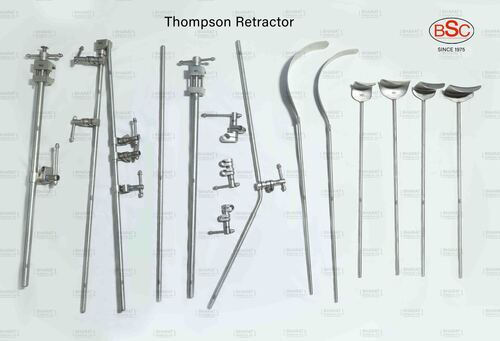
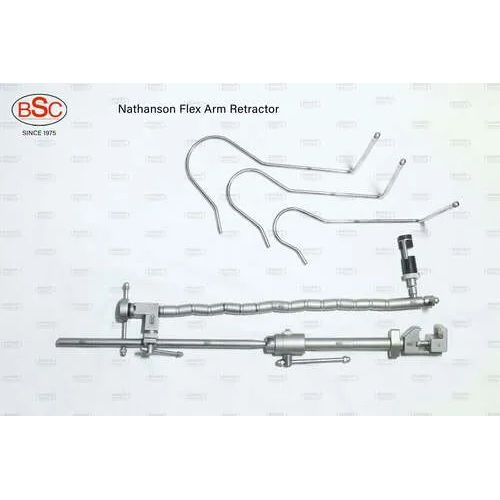
The Thompson retractor is a common surgical instrument used to retract and hold tissues aside during various procedures. It is a simple yet effective tool that provides clear visibility of the operative field.
Key Features:
- Single Blade: The Thompson retractor typically has a single, flat blade that can be adjusted to different widths.
- Angled Handle: The handle is often angled to provide better leverage and facilitate retraction in different directions.
- Locking Mechanism: Many Thompson retractors have a locking mechanism to securely hold the blade in place.
- Various Sizes: They come in different sizes to accommodate various surgical needs.
Precision and Flexibility in SurgeryEngineered for a wide spectrum of procedures, the Thompson Retractor's modular architecture and customizable blade selection provide unmatched adaptability. Surgeons can fine-tune retraction to suit anatomical requirements, enhancing operative visibility and access. The variety of blade shapes, sizes, and ergonomic adjustability make it suitable for complex surgical tasks across specialties.
Robust Design and Hygiene AssuranceCrafted from stainless steel with your choice of polished or matte finish, the Thompson Retractor is built for durability and long-term performance. Fully autoclavable and delivered in new, sterile condition, it upholds the highest standards of hygiene, making it suitable for rigorous daily use within busy hospital settings. Silent operation further promotes a focused surgical environment.
Ease of Use and PortabilityFeaturing user-friendly handles and a secure table-mounting system, the Thompson Retractor ensures quick setup and effortless adjustment during procedures. Its lightweight frame, typically weighing 2-3 kg, maintains stability while remaining portable. The manual, non-electric design supports reliable operation in any operating room without dependence on external power sources.
FAQ's of Thompson Retractor:
Q: How is the Thompson Retractor applied during a surgical procedure?
A: During surgery, the Thompson Retractor is mounted securely onto the operating table using its locking mechanism. Surgeons choose and attach the appropriate number and type of blades, which are then adjusted for optimal tissue retraction. The ergonomic handles facilitate precise adjustments, maintaining exposure throughout the surgery without additional hands.
Q: What are the main benefits of the modular and adjustable frame design?
A: The modular frame allows for quick customization to suit different surgical needs across general, abdominal, neurological, and orthopedic applications. With interchangeable and variable-shaped blades, the system provides optimal access to the surgical site, ultimately improving procedural efficiency and patient safety.
Q: When should different blade types, such as malleable or fenestrated, be used?
A: Blade selection depends on tissue type and surgical requirements. Malleable blades are ideal for gentle, conformable retraction, fixed blades work well for steady exposure, and fenestrated blades allow for passage around delicate structures, enhancing versatility in challenging scenarios.
Q: Where can the Thompson Retractor be sourced in India?
A: The Thompson Retractor is available through authorized distributors, manufacturers, suppliers, and medical equipment traders across India. Hospitals and surgical centers can contact reliable partners for quotations and demonstrations suited to their clinical needs.
Q: What is the cleaning and sterilization process for this retractor system?
A: After use, the Thompson Retractor should be thoroughly cleaned, disassembled if necessary, and then autoclaved as per hospital protocols. Its stainless steel construction and autoclavable design ensure effective sterilization without compromising durability or performance.
Q: Is the Thompson Retractor reusable and how does this impact hospital operations?
A: Yes, the retractor is fully reusable and designed for repeated sterilization. This feature significantly reduces long-term costs for hospitals and ensures accessibility for ongoing surgical demands, supporting both environmental and economic sustainability.





 Send Inquiry

 Send Inquiry
 Send Inquiry
 Send SMS